The challenge
Stroke severity depends not only on the restoration of blood flow but also on the immune response that follows the initial injury. Although stroke is primarily viewed as a brain disorder, signals originating outside the central nervous system may influence how the disease develops. The gut microbiota produces metabolites that interact with the immune system, but how these microbial signals affect post-stroke inflammation and brain damage remains poorly understood. In particular, the role of intestinal dendritic cells and their aryl hydrocarbon receptor (AHR) in connecting gut-derived signals to immune responses in the brain has remained unclear. Understanding these mechanisms could reveal new therapeutic targets to limit tissue damage and improve recovery after stroke.
The approach
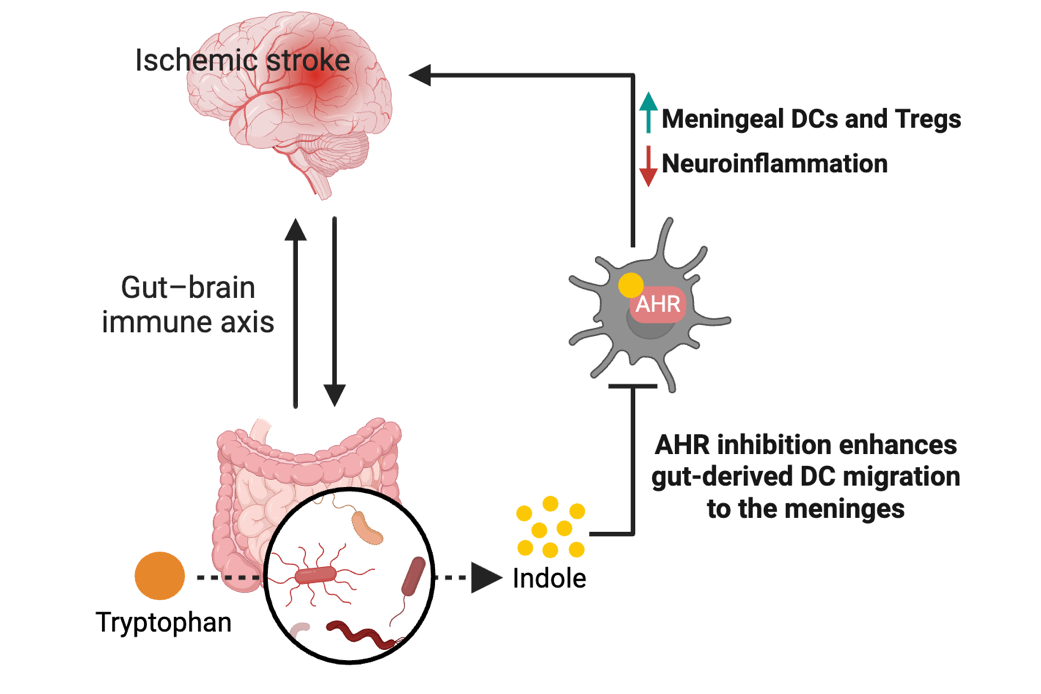
The researchers combined experimental stroke models in mice with analyses of human stroke patient data. They investigated the role of indole, a metabolite produced by gut bacteria carrying the tnaA gene, and examined how it affects AHR signaling in intestinal dendritic cells. By selectively disrupting AHR in these immune cells, they assessed its contribution to stroke-related brain injury. The team also investigated associations between bacterial tnaA abundance and clinical outcomes in people with
The findings
The researchers found that indole-producing gut bacteria were more abundant in mice with severe stroke and that indole contributed to increased brain injury. The effects involved AHR signaling in intestinal dendritic cells. When AHR was specifically disabled in these cells, mice experienced less brain damage, accompanied by increased migration of dendritic cells toward the meninges and enhanced protective T-cell responses. In human patients, higher abundance of bacteria carrying the tnaA gene was associated with poorer functional outcomes after ischemic stroke. These findings identify a potential pathway linking microbial metabolism, intestinal immunity, and the severity of brain injury.
The implications
The study identifies the gut microbiota and intestinal immune signaling as potential targets for future stroke therapies. Further research is needed to establish whether modifying these pathways can safely improve outcomes in humans.
Relevance for CRC 1744
The study was led by CRC 1744 Member Corinne Benakis with contributions from researchers at the Institute for Stroke and Dementia Research at LMU Munich and collaborating institutions. The work benefited from the collaborative TRR 355 research network on regulatory T cells, as well as expertise from Michael Zimmermann at EMBL and Michael Gigl at TUM. These collaborations enabled the team to investigate microbial metabolites and connect gut-derived signals with immune responses after stroke.