The Open question
Diseases like obesity affect multiple organ systems simultaneously, but existing tools can only examine selected tissues. Studying cellular and structural changes across an entire organism at single-cell resolution has remained technically impossible. This limited the ability to identify body-wide structural changes and understand how local abnormalities relate to systemic disease processes.
The Approach
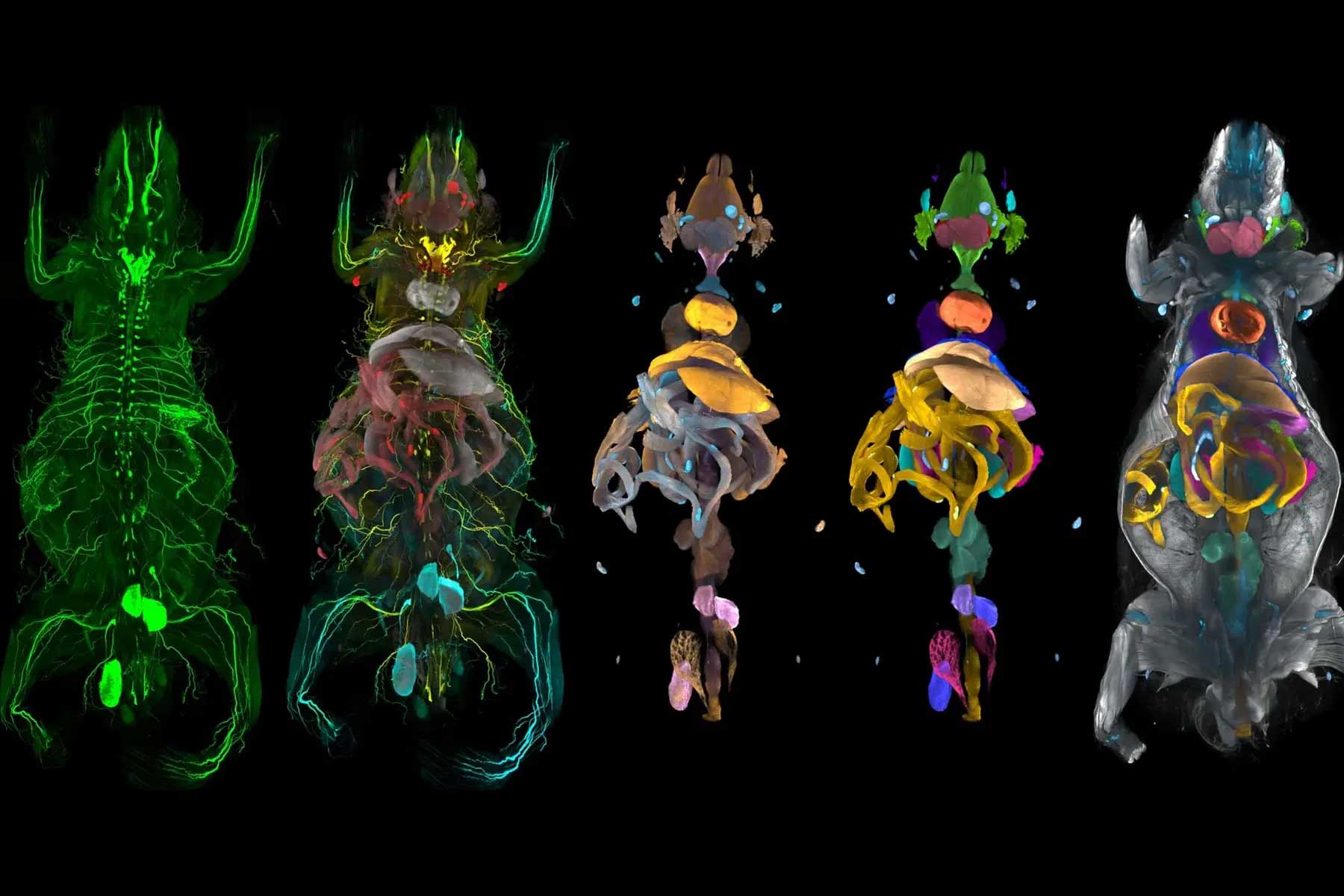
We developed MouseMapper, a deep-learning platform that automatically segments organs, nerves, and immune-cell clusters across whole-body imaging datasets. The framework was applied to mouse models of obesity and combined with spatial proteomics and human tissue analyses.
What the data showed
MouseMapper identified obesity-associated structural alterations in the infraorbital branch of the trigeminal nerve, accompanied by impaired whisker sensory function. Proteomic analyses revealed changes in pathways linked to axon remodelling, cytoskeletal regulation, complement activation, and inflammation. Strikingly, similar molecular signatures were detected in trigeminal ganglia from individuals with obesity. The framework also generated detailed three-dimensional maps of immune-cell accumulation throughout the body.
What this changes
MouseMapper provides a scalable tool to study systemic disease in 3D. It enables identification of disease hotspots and the translation of cellular findings from animal models to human conditions.
Relevance for CRC1744
MouseMapper offers a powerful framework for studying neurovascular and neuroimmune interactions across organs and tissues. Its ability to map inflammation, neural alterations, and systemic disease processes has broad relevance for investigating mechanisms of cerebrovascular dysfunction and disease progression.