The Open Question
Protein production changes dramatically during development and is disrupted in diseases such as cancer, neurodevelopmental disorders and ribosomopathies. However, researchers have long lacked a way to directly manipulate ribosomal RNA—the core component of the protein-making machinery – to determine whether changes in protein synthesis actually drive these biological processes.
The Approach
We developed TAPIR (Targeted Activation of Protein Translation), a CRISPR-based strategy that activates ribosomal RNA transcription without altering other major growth pathways. Using neural stem cells, mouse models and disease models, we investigated how increased protein synthesis influences cell behaviour and whether this approach could model or even rescue disease-associated phenotypes.
What the data showed
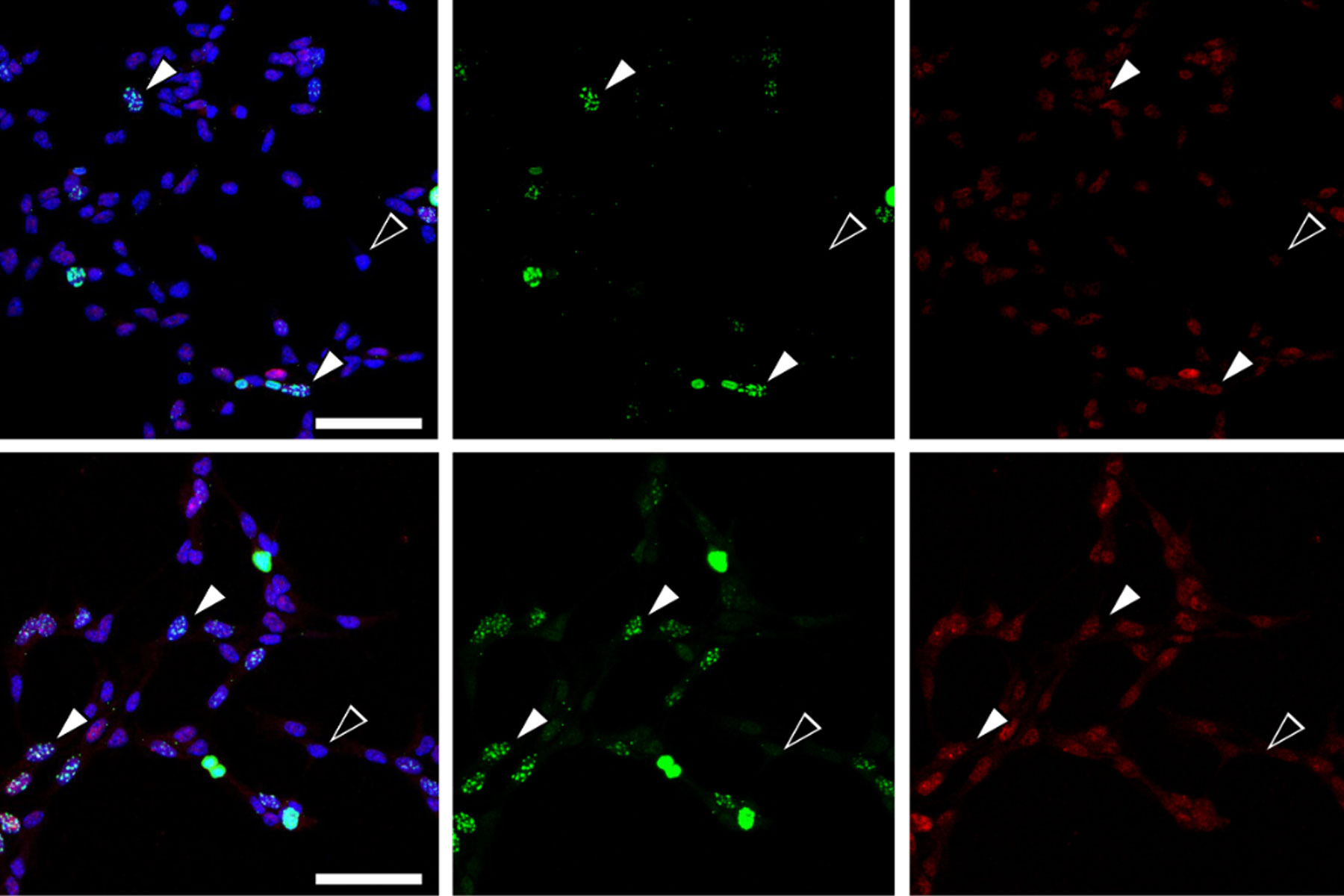
Increasing ribosomal RNA enlarged the nucleolus, boosted global protein production and accelerated cell proliferation. In neural stem cells, enhanced protein synthesis promoted self-renewal while delaying differentiation, both in cultured cells and during brain development in vivo. The same approach also partially rescued defects in a mouse model of Treacher Collins syndrome, a disorder caused by impaired ribosome biogenesis.
Why this matters
Our findings demonstrate that protein synthesis is not merely a consequence of cell identity, it actively helps determine it. By providing the first direct method to increase ribosomal RNA transcription, TAPIR opens new opportunities to study stem cell biology and explore future therapeutic strategies for disorders linked to defective protein synthesis.
Relevance for CRC1744
Understanding how neural stem cells maintain their regenerative capacity is central to deciphering brain repair and neurovascular disease. This work provides new insight into the fundamental mechanisms controlling stem cell behaviour and highlights how basic cellular processes such as protein synthesis shape neural development and regeneration. The study includes contributions from CRC1744 investigators Magdalena Götz (Project C01) and Jovica Ninkovic (Project C03).