The Open Question
Atherosclerosis develops preferentially at arterial branches and curves, where blood flow becomes disturbed. Scientists have long known that these regions are more prone to inflammation and plaque formation, but the molecular mechanisms linking altered blood flow to cholesterol entry into the vessel wall remained incompletely understood. In particular, the role of the cannabinoid receptor CB1 in endothelial cells had not been investigated.
The Approach
We combined analyses of human atherosclerotic plaques with mouse models, endothelial cell experiments, single-cell RNA sequencing and pharmacological inhibition to investigate how endothelial CB1 signalling influences vascular inflammation, lipid transport and plaque development.
What the data showed
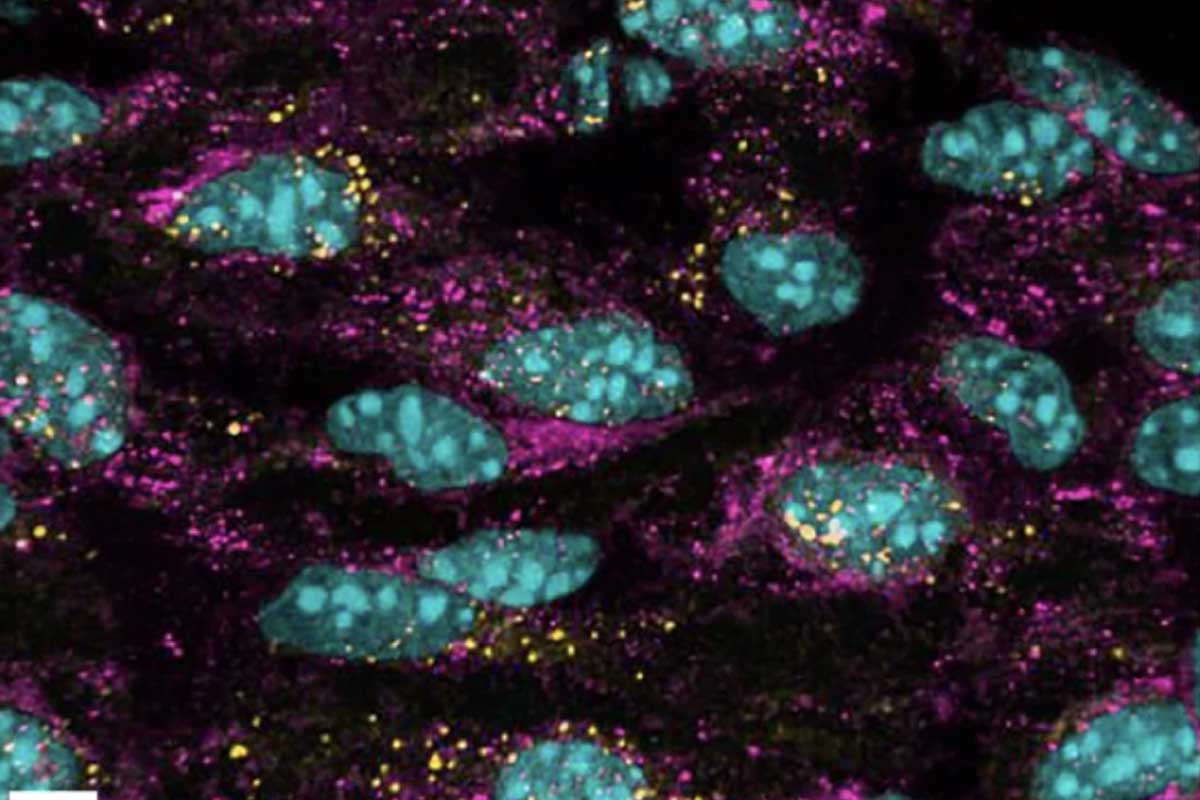
The researchers found that disturbed blood flow increases CB1 receptor expression in endothelial cells. Removing CB1 specifically from the endothelium—or blocking it with a peripherally acting drug—reduced vascular inflammation, decreased LDL cholesterol uptake into the arterial wall and slowed atherosclerosis in mice, while also improving several metabolic parameters. The protective effects were particularly pronounced in females.
Why this matters
These findings identify endothelial CB1 as an important regulator of vascular dysfunction and plaque formation, suggesting that drugs targeting peripheral CB1 signalling could help prevent cardiovascular disease while avoiding unwanted effects in the brain.
Relevance for CRC 1744
Endothelial dysfunction and the response of blood vessel walls to mechanical and inflammatory signals are central to CRC 1744's research focus on vascular compartments. This study provides a concrete molecular mechanism linking disturbed flow, endothelial receptor signalling, and cholesterol transport into the artery wall — directly relevant to the CRC's work on how vascular compartments are disrupted in neurovascular disease. CRC 1744 members Sabine Steffens (Project A06) and Mikael Simons (Projects C02 & Z02) contributed to this study.